niedziela, 18 grudnia 2016

Great Inventions part 8

Great Inventions part 8

Car:
Car is a wheeled self-powered motor vehicle used for transport. The first motor vehicle ever created was a car artillery made by french military engineer N. J. Cugnot in 1769. Due to high weight of steam engine almost all vehicles created in that time were the prototypes of steam stagecoaches. In XIX century the elecrtric cars - vechicles driven by energy from battery started to appear. At the end of XIX century this type of cars reached stunning speed of 100km/h. The first vechicle with internal combustion engine was invented in 1875 by S. Marcus and despite reaching the max speed of 6km/h it is said to be the prototype of modern car. Next important moment in history of automotive was invention of high-speed petrol engine in 1883 and vechicle equipped with it in 1886 by G. Daimler. In the same year K. Benz created his own model of car. In 1890 both of them are setting up their car factories in 1926 after many years of fierce competition their companies merge creating Daimler-Benz Company. At first all cars had shape of horse-drawn carriage which changed as a result of car accident during race in 1900, when driver of one of the Daimler's car died.
Cugnot's vechicle:

niedziela, 4 grudnia 2016

Great Inventions part 7

Great Inventions part 7

Incandescent light bulb:
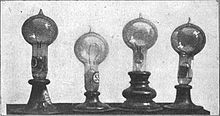
Light bulb is an electric light with a wire filament heated to such a high temperature that it glows with a visible light. The fliament heated by passing an electric current is protected from oxidation with a glass or quartz bulb that is filled with inert gas or evacuated. The first recorded inventor of a light bulb was de Moleyns who in 1841 created a small electric lamp. It wasn't very successful invention because the platinum wire he used was easily melting. Much better was a bulb with carbon fiber obtained from charred bamboo created in 1854 by Henry Goebel. The third bulb inventor Alexander Łodygin's creation in 1873 lighted for 30 minutes. Among the light bulb inventors two of them stood out: Joseph Wilson Swan who used bayonet base in his bulb which in 1878 lighted for 13,5 hours and Tomas Alva Edison whose bulb in 1879 lasted for tens of hours. Swan's patent blocked the european market from Edison so they started the company named "Siemens Edison Swan". Till today we use Edison's bulbs with threaded shaft (Edison - E27) in our houses and Swan's bayonet base in car lights.
                           Edison's light bulbs:

niedziela, 27 listopada 2016

Great Inventions part 6

Great Inventions part 6

Telescope:
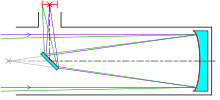
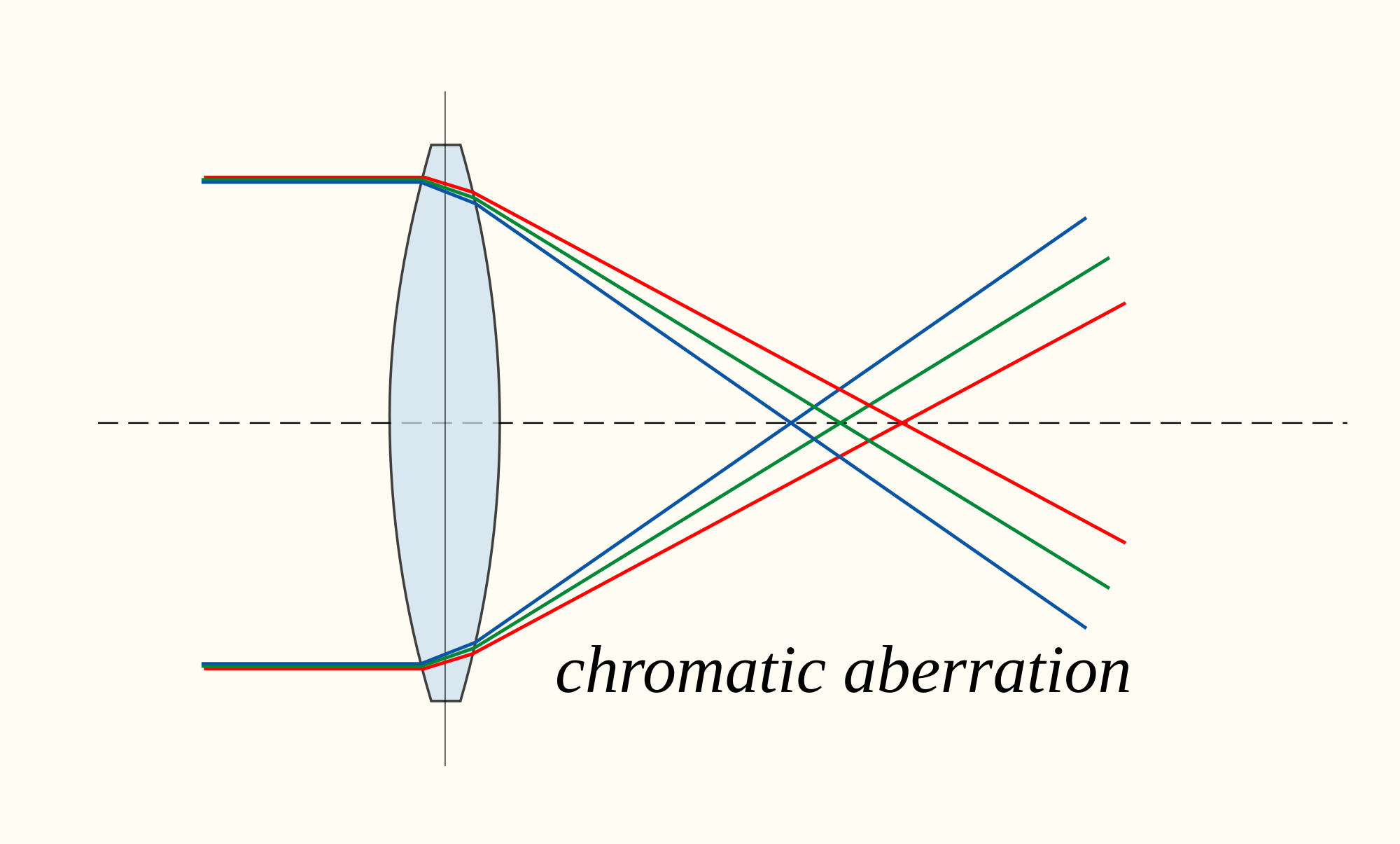
Lenses were used for cenruries until someone found out that combining two lenses together enlarge the image. Probably the first one who did it was one of Dutch glasses maker in XVII century. Hans Lippershey, Zacharias Jenssen and Jacob Metius are the three whom the development of refracting telescope is credited. Hans patented his project in 1608 and started to manufacture it. Dutch government bought them for army because they quickly realized how usefull it is for marine. In 1609 Galileo heard about Dutch telescope, within a month he built his own and improved it in the following year. In the same year he become the first pearson who point the telescope skyward in order to make telescopic obeservations of the celestial object. Using the telescope Galileo made some crucial discoveries for astronomy and changed the point of view about the structure of the universe. In 1668 Isaac Newton using not only lenses but also mirrors created a reflecting telescope in which do not occure chromatic aberrations (colors distortions) unlike in the refracting ones. Invetion of achromatic lenses in 1733 which partialy corrected color aberrations enabled to produce shorter and more functional refracting telescopes.

Newtonian Telescope:  

Chromatic Aberration:

Znalezione obrazy dla zapytania chromatic aberration     Znalezione obrazy dla zapytania chromatic aberration

niedziela, 20 listopada 2016

Great Inventions part 5

Great Inventions part 5

According to the comment below the previous post about Steam engine - James Watt introduced some crucial improvements to steam engine and because of that he is said to be the one who started the Industrial age. Maybe that's why he comes to your mind when You think about the steam engine.

Refirigerator:
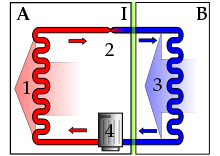
Before the invention of refrigerator people used icehouses to storage food for the most of the day. Basically it was a hole below the ground level filled with snow and ice where you store food to keep it fresh for longer. The first who invented something like refrigerator was professor William Cullen in 1755. He used a pump to create a partial vacuum over a container of diethyl ether, which then boiled, absorbing heat from the surrounding air. This experiment created a small amount of ice but have no practical usage at that time. In 1805 Oliver Evans described a closed vapor-compression refrigeration cycle for the production of ice. Thanks to the British scientist Michael Faraday (the same one who is known from his Faraday cage) who liquified ammonia and other gases by using high pressures and low temperatures in 1820, 14 years later Jacob Perkins invented the first vapor-compression refrigerator system which could operate continously. The refrigerators for home and domestic use was created in 1913. The first company that succeed in commercialising fridges was Electrolux.
                             Scheme of refrigerator:

niedziela, 6 listopada 2016

Great Inventions part 4

Great Inventions part 4

Steam engine:
It's a heat engine that uses steam as working fluid to perform mechanical work. The first steam engine was aeolipile (also known as Heron's Engine) created in the 1st century AD  by Heron from Alexandria. His invention was a cupola rotated by vapor stream from bent metal tubes. It didn't have any practical use back then but in fact it was a complete model of steam turbine. In 1690 Denis Papin created a cylinder with piston and little amount of water on the bottom, which was heated to pull up the piston and after removing the source of heat steam was condensing and the piston was moving. Due to too low thermal efficiency his machine couldn't work properly but the year of his invention is considered as the birth of steam engine. The first useful steam- powered machine was a pump for dewatering mines created by Thomas Savery in 1690. His invention had the power of 1 horsepower (750W). In 1712 Thomas Newcomen improved Savery's machine to piston atmospheric steam engine. In 1883 Carl Lavar created action turbine and year later Charles Parsons  created reaction engine.

niedziela, 23 października 2016

Great Inventions part 3

Great Inventions part 3
"Four Great Inventions" (part 2/2)

Papermaking:
Paper was used already in about 2nd century BC for wrapping and padding, but paper mass production was invented in about 100 AD. First sheets of paper were made of mulberry and other bast fibres, fishnets, old rugs and hemp waste. Using paper as writing medium was widespread by 3rd century AD. By 6th century paper in China paper sheets begun to be used as a toilet paper and one century later it was folded and sewn to create bags for tea. The paper currency was first developed in 7th century but it wasn't really used until 11th century.

Printing:
Woodblock printing was first found in China is about 220 AD and futher advanced by 11th century. In China was also invented movable type of printing but because of the number of chinese characters it wasn't that popular. Creating a book by using printing method was long and tedious work due to the need to assemble thousands of individual characters but if the same book must have been be copied thousand times it became eventually more efficient than rewriting.

According to the comment below the first part of "Four Great Inventions" these inventions are so important to China because none of them were reinvented in Europe but they were brought there from China. Of course they were very much improved in Europe (like modern dry compass and western printing press).

niedziela, 16 października 2016

Great Inventions part 2

Great Inventions part 2
Today let's look at "Four Great Inventions". (part 1/2)

This term describes four inventions from ancient China that are celebrated in Chinese culture for their historical significance and as symbols of ancient China's advanced science and technology.

Compass:
The first one is Compass. Invented in about 200 BC during the Han Dynasty but it wasn't used for navigation but for geomancy and fortune-telling. The earliest reference of usage for navigation comes from the book dated to 1040-1044. Initially the lodestone compass was a magnetic needle floating in a bowl of water(known as "wet compass").

Gunpowder:
It was discovered in 9th century by Chinese alchemists searching for an elixir of immortality. During this time the gunpowder formulas' nitrate level was between 27% and 50%. By the end of 12th century formulas was improved and capable to be used in the earliest granades.
In 1280 there was a fire in a bomb store in arsenal in Weiyang which caused  great explosion where 100 guards were killed instantly and wooden pillars were blown to the sky for a distance of 3 km away.
In 14th century the quality of gunpowder allowed to produce first gunpowder powered guns.


Phrases from "Ted":
Baloney - something not true
Example: I think that UFO is utter baloney.
Split-second - very short period of time
Example: They time I had to make a split-second decision.